
Where it shows first
At the front, the hairline usually moves back at the temples first, so the middle holds while the corners open up. At the back, the crown thins around the swirl, where hair grows outward in a circle.
The hairline is what everyone sees first, face to face. The crown is the area a man rarely sees himself and everyone else does: under the downlights in a wedding hall, or in an Eid photo taken from the balcony. Overhead light, the Amman midday sun included, falls straight onto it.
What fibers can and can't cover
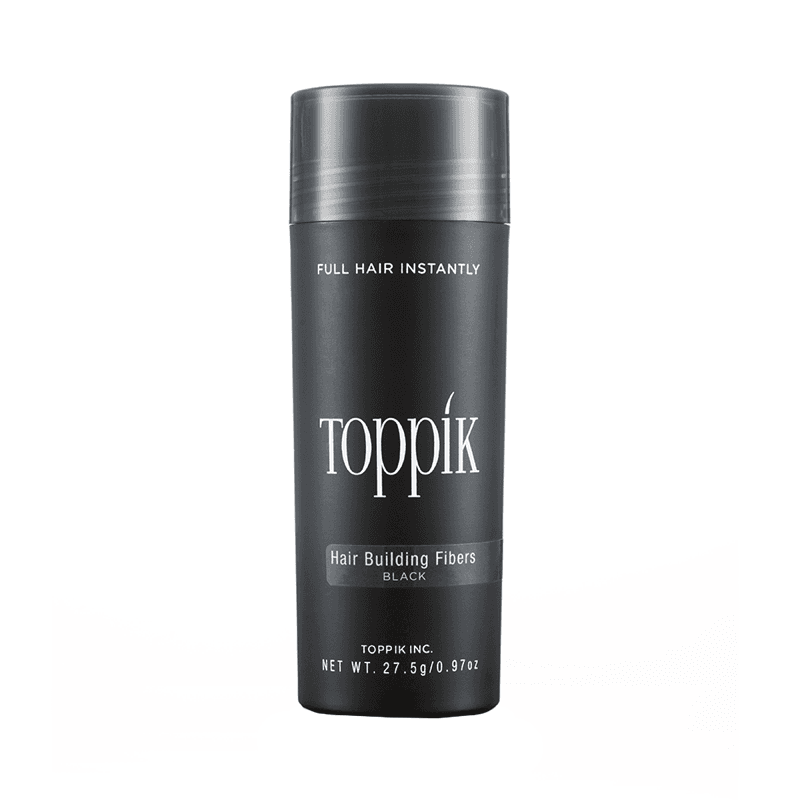
Toppik Hair Building Fibers are colored keratin fibers, made of the same protein as hair. Shaken over a thinning area, they cling to the hairs already there, so the scalp stops showing through. They stay in place until the next wash and resist wind, rain and perspiration.
That cling is also the limit. A receding temple usually still has fine, short hairs, and a thinning crown has plenty, so the fibers have something to hold. Completely smooth skin has nothing, so fibers won't draw a new hairline where there is no hair. What they do well is soften the corners and fill in the crown.
The hairline: soft, even corners
The full routine is in our step-by-step guide to applying Toppik. At the temples, these details matter most:
- Style the hair first. Hair pushed slightly forward with some texture covers more of the temples than hair combed straight back.
- Start with one temple: shake a little just behind the corner, where the fine hairs are, not over the forehead.
- Pat the fibers forward with a fingertip, then repeat on the other side.
- Compare both sides in the mirror. Temples rarely recede evenly, so the thinner side may need a second light layer.
- Wipe stray fibers off the forehead with a dry tissue, and keep the very edge lighter than the area behind it.
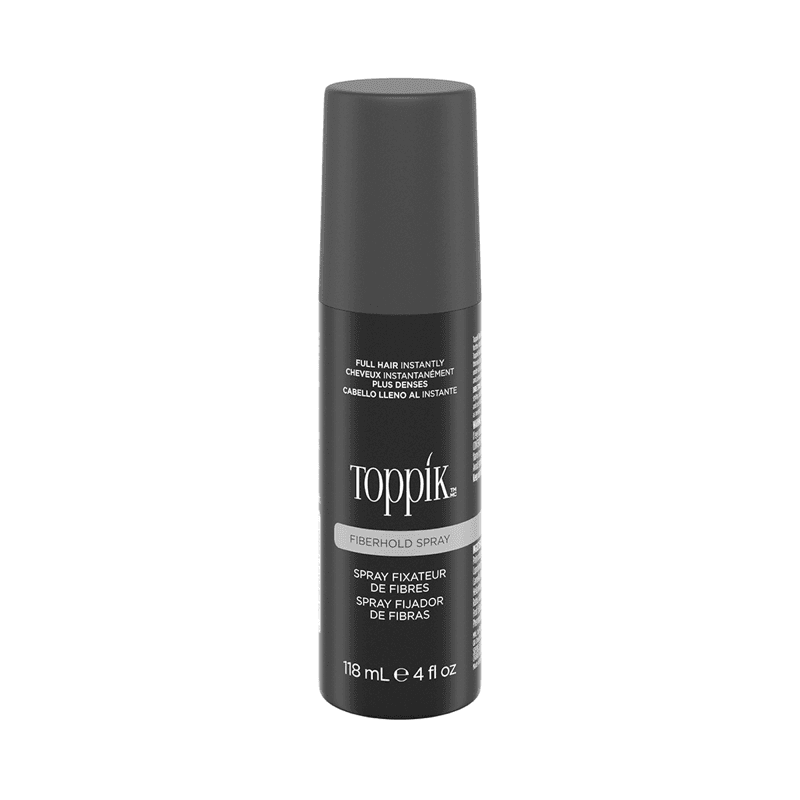
- Set the temples with a light mist of FiberHold Spray, which strengthens the bond between fibers and hair for longer wear.
The crown: let the phone camera check
The crown is out of sight, so the mirror to use is a phone held above the head.
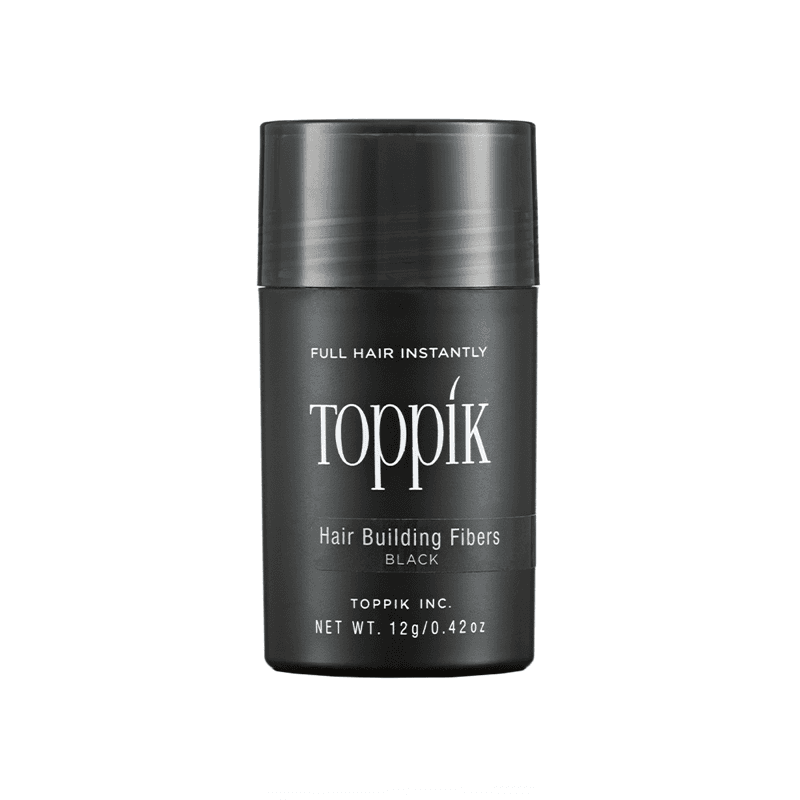
Shake the fibers over the center of the swirl, pat outward in the direction the hair grows, then take a second photo. Building up slowly keeps the crown looking like hair rather than a dark patch. When both the hairline and the crown need covering, the Economy 27.5 g lasts about 60 days or more, against about 30 for the 12 g.
Short haircuts, the barber and the beard
Short cuts and fades are everywhere in Amman, and they suit fibers: shorter sides make the top look denser, and short hair is easier to match, since the root color runs almost the whole length of each hair.
- Keep a little length on top and at the crown. Fibers cling to existing hairs, and the shortest clipper setting leaves them less to hold.
- Match the shade at the roots in daylight. Many men here choose between Black and Dark Brown; our guide to choosing a Toppik color covers gray and salt-and-pepper hair too.
The fibers can be used on the beard as well. Sparse areas on the cheeks or jaw look more even with a little fiber in the beard's own shade, patted in. A beard is often darker, warmer or grayer than the hair on the head, so it may need a second shade.
Fibers alongside a doctor's advice
A receding hairline and a thinning crown are often hereditary in men, but not always, and some causes respond to treatment. A dermatologist is the person to see about the cause and any treatment, which usually takes months to show. Fibers don't affect hair growth and wash out with shampoo, so they cover the look in the meantime, or while the decision is being made.
After a hair transplant, ask the clinic when cosmetic products can go back on the scalp. If the scalp is itchy, sore or red, see a doctor first. Toppik is for external use only; stop using it if irritation or a rash appears.
To start, choose the 12 g bottle in the shade that matches the roots, with FiberHold Spray to set it. Toppik is also sold at pharmacies across Jordan: see where to find Toppik.
Questions
Can hair fibers cover a receding hairline?
They can make it look fuller where fine hairs remain, as they usually do at the temples. Fibers cling to existing hairs; on completely smooth skin there is nothing to hold, so they can't draw a new hairline.
Do Toppik fibers work on short hair or a fade?
Yes, as long as there is hair in the area to cling to. A little length on top and at the crown gives them more to hold.
Do hair fibers stop a hairline from receding?
No. Toppik fibers don't affect hair growth either way; they change how hair looks until the next wash. For the hairline itself, ask a dermatologist, including how to time fibers with anything prescribed for the scalp.
Will people notice fibers at the hairline?
The aim is for them to see hair, not a product. That comes from a shade matched to the roots, small amounts built up in layers, and a soft edge. A check in daylight shows anything that stands out.